
WELCOME BONUS 300%
UP TO €2000 + 100
FREE SPINS
UP TO €2000 + 100
FREE SPINS
Home → Games
Casino games at Spinania
Splitting in Blackjack: one hand becomes two
The Blackjack game variant offering a 0.15% house edge with classic rules provides a 3:2 payout on a blackjack. This game uses a single deck, which contributes to its low house edge, approximately 0.48 percentage points lower than an eight-deck game. Players may find this variant offers a more favourable playing field compared to multi-deck versions.
In Blackjack, the 'splitting' action allows a player to divide a hand into two separate hands when the initial two cards have an equal value. This manoeuvre can be strategically beneficial, especially when dealt two Aces or two Eights, potentially doubling the player's chances of achieving a strong hand. However, not all game variations permit splitting on all equal-value cards.
When a player splits their hand in Blackjack, the objective is to play each of the newly formed hands independently against the dealer's upcard. The payout for a winning hand remains consistent, typically at 3:2 for a natural blackjack, but the decision to split can significantly alter the game's mathematical outcome. This tactic requires careful consideration of the dealer's visible card.
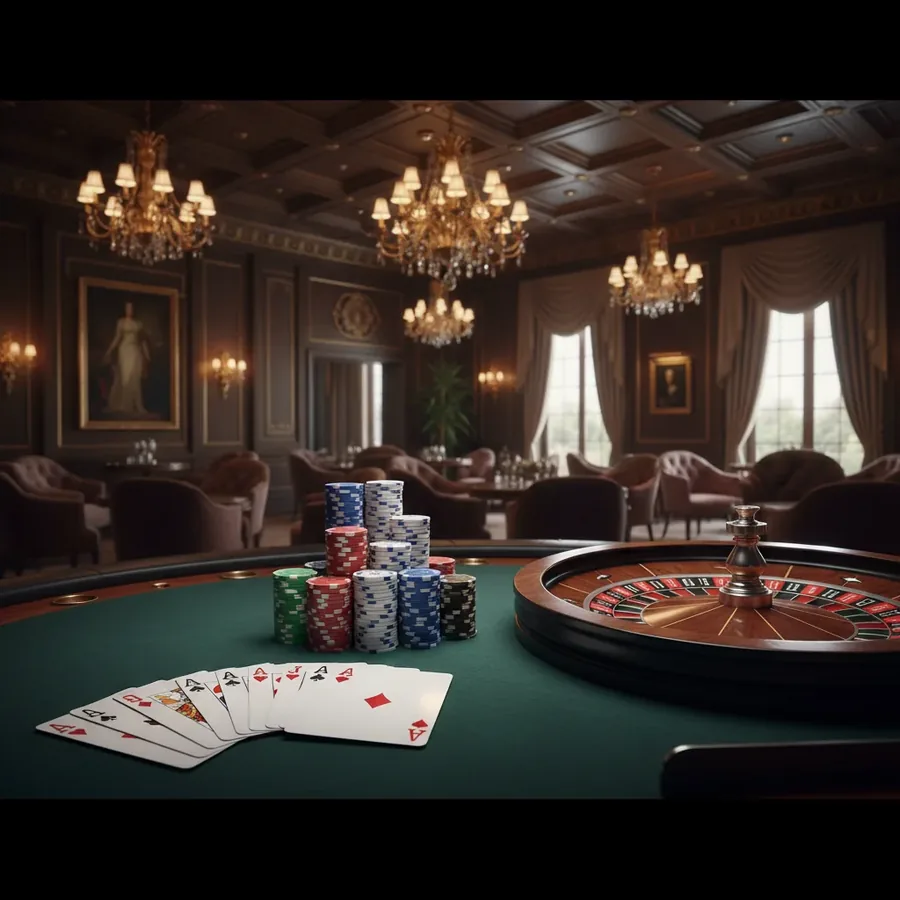
37 vs. 38 Sectors: One Zero Difference
European Roulette features 37 sectors on its wheel, comprising numbers 1 through 36 and a single zero (0). This layout results in a house edge of 2.70%, consistent across all bet types due to the fixed payouts relative to 36 sectors. Unlike its American counterpart, this single zero significantly reduces the casino's advantage.
The mathematical structure of European Roulette means that bets like Red/Black, Odd/Even, or 1-18/19-36 all offer a 1:1 payout. Despite the apparent simplicity of these even-money bets, the presence of the single zero sector ensures the house retains its edge on every spin. This consistency in house advantage is a key characteristic of the game.
With 37 sectors, European Roulette offers a Return to Player (RTP) of 97.30%, meaning that, in theory, 97.30% of all wagers are returned to players over an extended period. This RTP figure is lower than French Roulette with the La Partage rule, which boasts a 98.65% RTP on even-money bets. The difference is directly attributable to the rules concerning the zero.
Baccarat commission: 5 percent on each Banker win
The Banker bet in Baccarat, when played with a 5% commission on wins, offers a Return to Player (RTP) of 98.94%. This commission is applied to winning Banker bets, effectively reducing the payout from a standard 1:1 to 0.95:1. Despite this fee, it remains the strongest bet available in the main game due to the Banker's statistical advantage in drawing the third card.
Compared to other Baccarat bets, the Banker commission significantly impacts the house edge. While a Tie bet with an 8:1 payout has a substantial 14.36% house edge, the Banker bet's 1.06% house edge is considerably lower. Even the Player bet, with no commission, has a higher house edge than the Banker bet.
The 5% commission on Banker wins in Baccarat is a standard feature designed to balance the inherent statistical advantage the Banker position holds. This structure ensures that the casino maintains a low but consistent edge, making the Banker bet the most mathematically sound choice for players seeking better odds, with a standard deviation of 0.93.
How many sectors does the Game Show wheel have?
Game Show wheels, often featured in live casino offerings, vary in their structure and the number of sectors they contain. Unlike traditional table games with fixed rules, these wheels can incorporate a diverse range of outcomes, each with a specific payout. The number of sectors directly influences the potential house edge and the frequency of different wins.
The mathematical design of a Game Show wheel determines its RTP and house edge. For instance, some wheels might feature segments offering payouts of 1:1, while others provide much larger multipliers like 50:1 or even 100:1 for rarer outcomes. This variety in payouts creates a dynamic betting environment for players.
Understanding the specific configuration of any Game Show wheel is crucial for players assessing potential returns. The RTP on these games can differ significantly based on the number of sectors and the distribution of payouts across them. For example, a wheel with more high-payout sectors might have a lower overall RTP compared to one with more frequent, smaller wins.
37 vs. 38 Sectors: What the Double Zero Costs
American Roulette, with its 38 sectors including both a single zero (0) and a double zero (00), presents a significantly higher house edge of 5.26%. This is double the 2.70% house edge found on a European Roulette wheel, which only has 37 sectors. The additional '00' sector directly amplifies the casino's advantage on all bets.
The presence of the double zero in American Roulette dramatically impacts the Return to Player (RTP), reducing it to 94.74% compared to European Roulette's 97.30%. This difference means that for every 100 currency units wagered, players can expect to lose an average of 5.26 currency units in American Roulette, versus 2.70 currency units in European Roulette.
Bets on American Roulette, such as Straight, Split, or Dozen bets, carry the same payout ratios as their European counterparts but are negatively affected by the extra zero. For example, a Straight bet still pays 35:1, but the odds of hitting that specific number are reduced due to the 38 available sectors, thus increasing the house edge.
Game categories at a glance
| Category | Examples | Stakes From | Highlight |
|---|---|---|---|
| Slots | Chaos Crew, Immortal Romance, Big Bass Bonanza | 0,10 EUR | thousands of titles |
| Table games | Roulette, Blackjack, Baccarat | 0,50 EUR | classic rules |
| Live casino | Quantum Roulette Live, Ultimate Texas Hold'em | 0,20 EUR | real dealers |
| Jackpot games | Mega Moolah, Divine Fortune, Age of the Gods | 0,20 EUR | progressive pools |
| Instant games | Aviator, Plinko, Mines | 0,10 EUR | fast rounds |
| Video poker | Jacks or Better, Deuces Wild | 0,25 EUR | strategy based |
How Long Does a Roulette Round Take on Average?
A standard American Roulette round, featuring 38 sectors including '0' and '00', typically involves payouts calculated based on European wheel odds. The house edge on this variant stands at 5.26%, a significant increase compared to its single-zero counterpart due to the additional sector. This mathematical disadvantage applies across all betting types, including the straight bet with a 35:1 payout.
In contrast, European Roulette, with 37 sectors (1-36 plus '0'), offers a more favourable house edge of 2.70%. This reduction in the house's advantage is directly attributable to the absence of the '00' sector. Consequently, the overall RTP for European Roulette is 97.30%, presenting a better return to player than American Roulette's 94.74%.
The duration of a roulette round is not explicitly defined by game mechanics or payout structures, but the inherent house edge influences the long-term player experience. For instance, the 5.26% house edge in American Roulette means that, over an extended period, players can expect to lose approximately €5.26 for every €100 wagered, whereas European Roulette players would expect to lose €2.70.
Dozen 2:1: Twelve Numbers, One Third Coverage
Bets on dozens in roulette, offering a 2:1 payout, cover twelve distinct numbers out of the total. In American Roulette with 38 sectors, a dozen bet covers one-third of the available numbers. The house edge for this bet type is 5.26%, aligning with the overall disadvantage of this variant.
European Roulette, featuring 37 sectors, also offers a 2:1 payout on dozen bets. Despite covering twelve numbers, the house edge is significantly lower at 2.70% due to the absence of the '00' sector. This makes dozen bets in European Roulette a more favourable option compared to American Roulette.
The RTP for dozen bets in American Roulette is 94.74%, reflecting the 5.26% house edge. Conversely, European Roulette's RTP for dozen bets is 97.30%, demonstrating the substantial impact of the single '0' sector on player returns. This difference is critical for players seeking better value.
En Prison on Zero Gives Second Chance
French Roulette, specifically when utilizing the 'La Partage' rule, offers a reduced house edge of 1.35% on even-money bets such as red/black, odd/even, or high/low. This rule provides a second chance for players by returning half of their stake if the ball lands on zero.
The 'En Prison' rule in French Roulette provides a similar benefit to 'La Partage' for even-money bets when zero appears. Instead of returning half the stake, the bet is 'imprisoned' and carried over to the next spin. If the bet wins on the subsequent spin, the stake is returned; otherwise, it is lost.
These special rules significantly improve the RTP for even-money bets. For instance, with 'La Partage' or 'En Prison', the RTP for these specific bets in French Roulette can reach 98.65%. This is a substantial improvement compared to standard European Roulette, where the RTP for even-money bets is 97.30%.
Dozen 2:1 Hits 12 of 37 Numbers
Betting on a dozen in European Roulette covers twelve specific numbers out of the total 37 available sectors. This bet type offers a payout of 2:1. The house edge for this wager is 2.70%, a figure consistent across all bets in European Roulette due to the single zero.
The RTP for a dozen bet in European Roulette is 97.30%. This means that, theoretically, for every €100 wagered on a dozen bet over a very long period, €97.30 would be returned to the player. This RTP is directly linked to the 2.70% house edge.
In comparison, American Roulette, with its additional '00' sector, presents a higher house edge of 5.26% on all bets, including dozen bets. Consequently, the RTP for a dozen bet in American Roulette is 94.74%, making it a less favourable option for players prioritizing return.
Keno and Bingo with RTP Between 92 and 95
While specific Keno and Bingo game RTPs are not detailed in the provided data, general industry figures indicate that these lottery-style games typically exhibit a Return to Player (RTP) ranging from 92% to 95%. This places them on the lower end of the online casino game spectrum in terms of theoretical returns.
The house edge associated with Keno and Bingo games within this RTP range would therefore be between 5% and 8%. This margin allows the casino to maintain profitability over the long term. For comparison, games like Blackjack with optimal strategy can offer RTPs exceeding 99%.
Players engaging with Keno and Bingo should be aware that the lower RTP implies a higher average retention rate for the casino. This means that, on average, a larger portion of the total wagers is kept by the house compared to higher RTP games like Video Poker with an RTP of 99.54%.
Straight, Split, and Corner: Three Terms Briefly Explained
A Straight bet, covering a single number on the roulette wheel, offers a payout of 35:1. This bet type, along with Split (covering two numbers) and Corner (covering four numbers), are fundamental wagers available on European Roulette. European Roulette features a single zero, resulting in a house edge of 2.70%.
Comparing the house edge across different roulette variants highlights significant differences in player return. While European Roulette maintains a 2.70% house edge, American Roulette, with its double zero, presents a higher 5.26% house advantage. This difference is directly attributable to the additional '00' sector on the American wheel.
For players seeking a lower house edge on even money bets, French Roulette with the La Partage rule is a notable option. This rule refunds half the stake on even money bets when the ball lands on zero, reducing the house edge on these specific wagers to 1.35%. This is considerably lower than the 2.70% found on European Roulette's even money bets.
Casino Hold'em: Ante Payout Up to 100:1
In Casino Hold'em, the Ante bet is a primary wager, with payouts reaching up to 100:1 for a Royal Flush. This game typically follows standard rules where players place an Ante and then decide to Call (betting twice the Ante) or Fold after the flop. The theoretical RTP for the Ante bet is 99.18% over a full cycle.
The overall house advantage in Casino Hold'em is complex, comprising a 2.16% edge on the Ante and an additional 0.82% risk element on the Call bet. The average player bet is approximately 2.64 times the Ante, meaning the effective house edge on a player's real turnover is lower than on the Ante alone. For example, a Call bet pays 1:1.
Understanding the payout structure for different hands in Casino Hold'em is crucial for players. While a Royal Flush pays 100:1, other strong hands also offer favourable returns. A Straight Flush pays 20:1, Four of a Kind offers 10:1, and a Full House pays 3:1. Dealer pairs under 4 result in a push on the Ante bet.
Three Roulette Variants, Three House Edges Compared
European Roulette, characterized by a single zero (0) and 37 sectors, maintains a consistent house edge of 2.70% across all bet types. This edge is derived from the payout structure, which is based on 36 sectors, effectively creating a disadvantage on every wager. A Straight bet, for instance, pays 35:1.
American Roulette features an additional zero sector (00), bringing the total to 38 sectors. Despite using the same payout ratios as European Roulette, the presence of two zeros significantly increases the house advantage to 5.26%. This makes it a less favourable option for players compared to its single-zero counterpart.
French Roulette offers a more player-friendly experience, particularly on even money bets, due to the 'La Partage' rule. When the ball lands on zero, half the stake is returned on bets like Red/Black or Odd/Even. This reduces the house edge on these specific bets to 1.35%, a substantial improvement over the 2.70% found in European Roulette.
Craps Odds Bet with 0 Percent House Edge
The Odds bet in Craps stands out as a unique proposition, offering a 0.00% house edge when placed correctly. This bet is only available after a Point has been established on the Pass Line or Come bets. It allows players to wager on the outcome of the dice at true odds, providing a pure payout based on probability.
When combined with the Pass Line bet and utilizing the 3-4-5x odds, the overall house edge for Craps becomes 0.37%. The true odds payout for the Odds bet varies depending on the Point number: 2:1 for a Point of 4 or 10, 3:2 for a Point of 5 or 9, and 6:5 for a Point of 6 or 8. The RTP on the Odds portion itself is 100.00%.
While the Odds bet itself has no house advantage, its contribution to the overall casino edge is dependent on the player's strategy and the multipliers used. For instance, using 1x odds results in a combined house edge of 0.251%, whereas higher multipliers like 3-4-5x reduce this to 0.111% per roll when combined with the Pass Line.
La Partage applies only to even money bets
The La Partage rule in French Roulette specifically benefits players making even money bets, such as Red/Black, Odd/Even, or High/Low. When the outcome of the spin is zero, half of the stake placed on these wagers is returned to the player. This rule effectively lowers the house edge on these bets to 1.35%.
Unlike other roulette variants, French Roulette with La Partage offers a distinct advantage on its simplest bets. For example, a Red/Black bet typically pays 1:1. With La Partage, if zero hits, the player receives 50% of their stake back, a significant improvement compared to the standard 1:1 payout with no refund in European Roulette.
It is important to note that the La Partage rule is exclusive to even money bets and does not apply to any inside bets, such as Straight, Split, or Corner wagers. These inside bets in French Roulette retain the standard payouts and house edge calculations, similar to European Roulette, without the benefit of the La Partage concession.
Contact
Live - online chat
Banking







Providers












Spinania Casino 2026